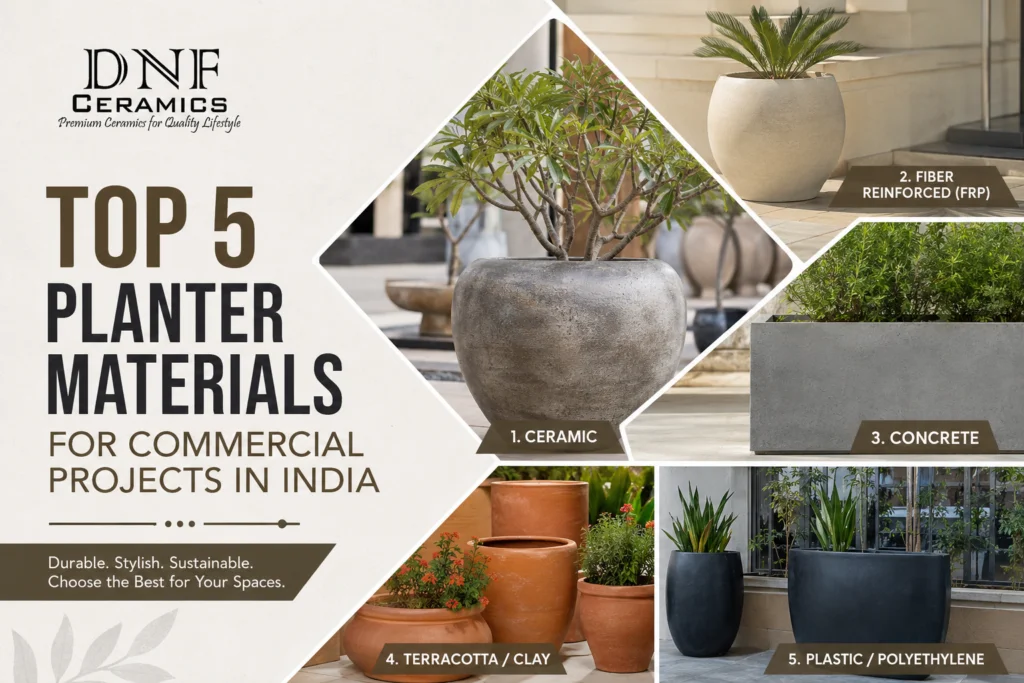
A ceramic planter is a long-term investment in the appearance and character of your property. Unlike FRP planters, which can develop surface chalking and UV discolouration over time indoors, or plastic, which degrades aesthetically within a few years, a well-maintained ceramic planter holds its appearance for decades. The operative phrase is ‘well-maintained.’ In a hotel or commercial environment where planters are subject to daily guest contact, cleaning chemicals, irrigation runoff, seasonal conditions, and periodic handling by maintenance staff, the right care protocols are the difference between a planter that still looks premium after ten years and one that looks neglected after three.
This guide was developed specifically for hotel operations teams, housekeeping managers, and commercial facilities teams responsible for maintaining ceramic pots and planters across guest-facing environments. For the procurement side — how to source, specify, and order — read our guide to sourcing planters for hotels and resorts in India.
Understanding Your Glazed Ceramic Planters
Before establishing a maintenance routine, it helps to understand what you are maintaining. The surface of a glazed ceramic planter is a glass-like layer — chemically fused to the clay body during the kiln firing process at temperatures above 1,100°C. This glaze layer is hard, non-porous, and chemically stable — but it is not indestructible. It can be scratched by abrasive materials, etched by strongly acidic or alkaline chemicals, and cracked by sharp impacts or sudden extreme temperature changes.
The clay body beneath the glaze has different characteristics. It is denser than unglazed terracotta due to higher firing temperatures, but it still has some porosity at the microscopic level. Understanding the difference between glazed surface care and unglazed terracotta care is essential — the protocols are different in several important ways. For the full breakdown of glaze finish types and their maintenance implications, see Glazed vs Unglazed Terracotta Pots — Which to Choose.
Weekly Maintenance: Glazed Indoor Ceramic Planters
For glazed ceramic planters in hotel lobbies, restaurant interiors, spa reception areas, and corridor installations, a weekly wipe-down is the standard maintenance protocol. Use a clean, soft microfibre cloth dampened with clean water to remove surface dust, fingerprints, and light smearing from the glaze surface. For planters in high-traffic positions — flanking reception counters, at lobby entry, or alongside lift doors — a mid-week wipe may be warranted during peak occupancy periods.
For marks that do not respond to a damp cloth, a small amount of mild dish soap diluted in clean water and applied with a soft cloth is effective. Always follow with a clean damp cloth to remove soap residue — dried soap film on a glaze surface dulls the finish over time.
- Never use abrasive scrubbers, steel wool, or scouring pads — these scratch the glaze surface permanently
- Avoid acidic cleaning products — vinegar-based cleaners, bathroom descalers, and citrus-based products can etch glaze over repeated use
- Do not apply steam cleaning directly to ceramic planters — the localised intense heat can cause glaze crazing (fine surface crackle) on pieces that are not designed for thermal shock
- Do not use solvent-based cleaning products on glazed ceramics — these can affect the glaze chemistry and dull the surface sheen
Outdoor Ceramic Planters: Additional Care Requirements
For outdoor ceramic planters — hotel entrance driveways, terrace gardens, poolside positions, resort landscaping — the maintenance requirements are more demanding due to exposure to weathering, biological growth, and hard water irrigation.
Algae and Moss Growth
In humid climates — particularly coastal properties, hill resorts, and properties in high-rainfall regions — outdoor ceramics develop surface algae or moss growth over time. The appropriate cleaning agent is a dilute white vinegar solution (approximately 1 part vinegar to 10 parts water) applied with a soft natural-bristle brush and then rinsed thoroughly with clean water. This treatment is effective on unglazed exterior surfaces and on the base and sides of planters where glaze is absent. Avoid applying vinegar solutions to high-gloss glazed surfaces repeatedly — the mild acidity can affect the sheen over time.
Hard Water Staining
In areas with hard water supply — a common issue in Delhi NCR, Rajasthan, and other high-mineral-content water regions — irrigation runoff deposits white calcium carbonate residue on ceramic surfaces. Light deposits can be removed with a cloth dampened with dilute citric acid solution (fresh lemon juice works for light staining). More stubborn deposits respond to a proprietary descaling product designed for natural stone — avoid products formulated for metal or bathroom fittings, as these may be too aggressive for ceramic glazes.
UV and Weathering
Quality glazed ceramic planters are UV-stable and do not yellow or chalk under sun exposure the way FRP planters can. However, prolonged UV exposure does very gradually affect the depth and vibrancy of some glaze colours — particularly bright, reactive, and highly pigmented glazes. For outdoor positions in direct southern exposure, specifying matte or satin finishes rather than high-gloss reduces the visibility of any gradual change in glaze surface character.
Irrigation and Waterlogging Prevention
Overwatering is the single most damaging thing that can happen to a ceramic planter in a commercial setting — and it is almost always a protocol failure rather than an equipment failure. The consequences of persistent overwatering include: efflorescence (salt deposits migrating through the clay body to the surface), root rot in the planted material, waterlogging damage to finished flooring beneath the planter, and in severe cases structural cracking from freeze-thaw cycles in planters that hold standing water in winter months.
For drainage protocols and how to manage pots without drainage holes, read Do Ceramic Pots Need Drainage Holes. And for growing medium refresh timelines — an often-neglected aspect of commercial planter maintenance — see How Often Should You Repot Indoor Plants in India.
- Check drainage holes monthly and clear any root or debris blockage immediately
- Never allow planters to stand in trays of water for extended periods — empty trays within 30 minutes of watering
- Install moisture meters in large planters where watering is managed by maintenance rather than specialist horticulture staff
- For planters on polished marble or stone floors, use rubber feet or felt pads to prevent moisture transfer and staining of the floor surface
Managing Efflorescence
Efflorescence — the white powdery deposits that appear on the outer surface of clay pots — is a natural phenomenon that occurs when soluble salts in the clay body or growing medium migrate to the surface and crystallise as moisture evaporates. It is particularly common in new terracotta and unglazed ceramic planters and in glazed planters where the base or lower exterior is unglazed. It is not a quality defect — it is a natural characteristic of fired clay products that typically diminishes after the first year of use as the freely soluble salts are depleted.
Management: dry-brush loose efflorescence with a stiff natural-bristle brush (not metal wire, which scratches), then clean the area with a dilute white vinegar solution and rinse. Understanding why efflorescence occurs is explained in detail in our guide to how ceramic pots are made — specifically the role of clay body mineral content in the fired product.
Annual Condition Assessment
Once per year — ideally at the start of peak season for occupancy — conduct a systematic inspection of all ceramic planters across the property:
- Inspect for hairline cracks, particularly at the rim, base junction, and any join lines on hand-built pieces. Cracks that pass through the full pot wall will leak and should be assessed for replacement.
- Check for glaze crazing (fine surface crackle network) — cosmetic crazing is normal in older glazed ceramics and does not indicate structural failure
- Verify drainage hole functionality across all planters — probe with a bamboo skewer if uncertain
- Assess growing medium condition — replace compacted, salt-saturated, or depleted soil, particularly in large floor planters where the soil column is deep
- Photograph any pieces requiring replacement and submit reference photos to your supplier for restocking. DNF Ceramics maintains production records for all hotel orders to enable exact-match replacement pieces
For the full procurement guide when replacement or expansion is needed, return to Best Large Ceramic Planters for Hotel Lobbies in India and our hotel planter sourcing guide.