The hotel lobby is the single most scrutinised interior space in any property. Every material choice in the lobby — floor, wall, ceiling, furniture, lighting, and plants — is evaluated by guests, reviewers, and brand standards teams. Planter material is no exception. Choose correctly and the planters disappear into the composition, contributing to a sense of quality without demanding attention. Choose incorrectly and they become a visible misfit in an otherwise well-executed space. This guide walks through the material decision systematically — covering the five main options available for hotel lobby planters in India and the specific conditions under which each is the right choice.
The Five Main Planter Materials for Hotel Lobbies
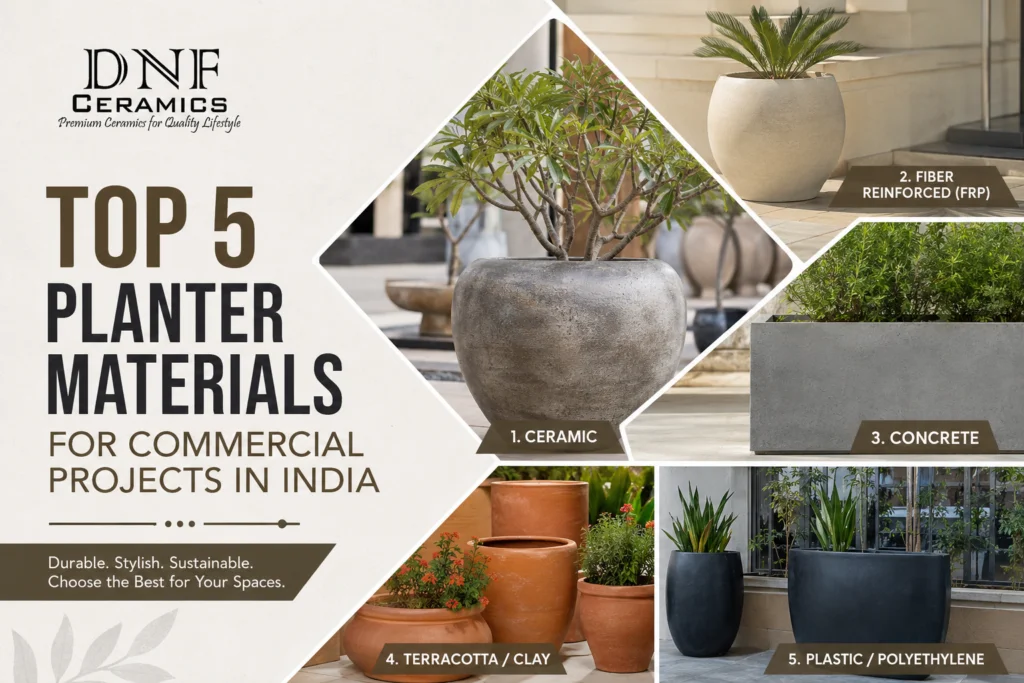
1. Glazed Ceramic — The Default Standard
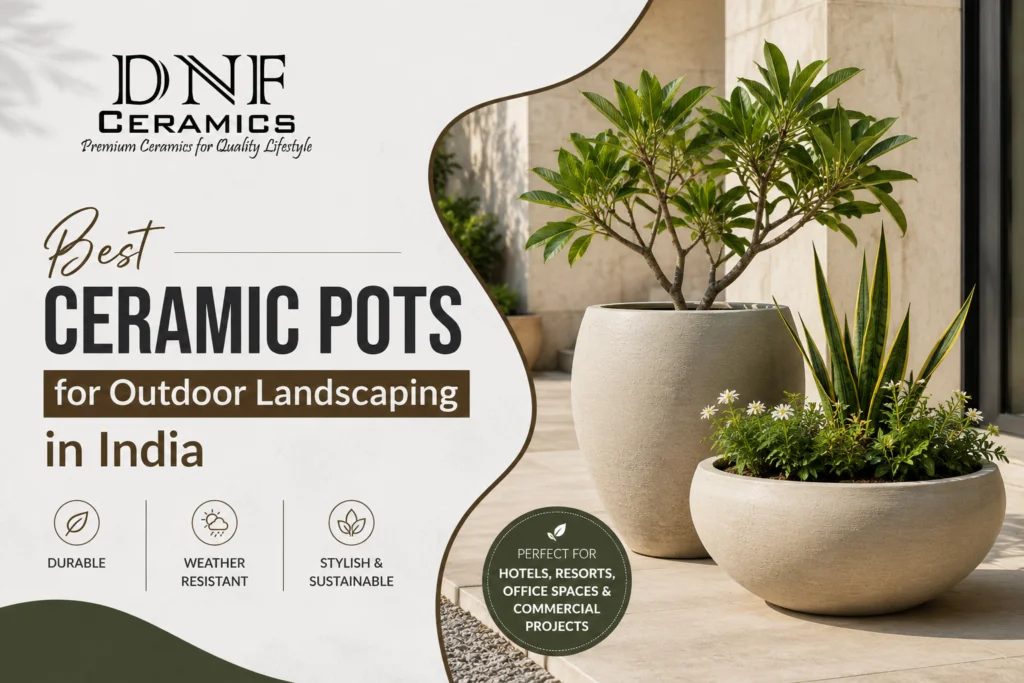
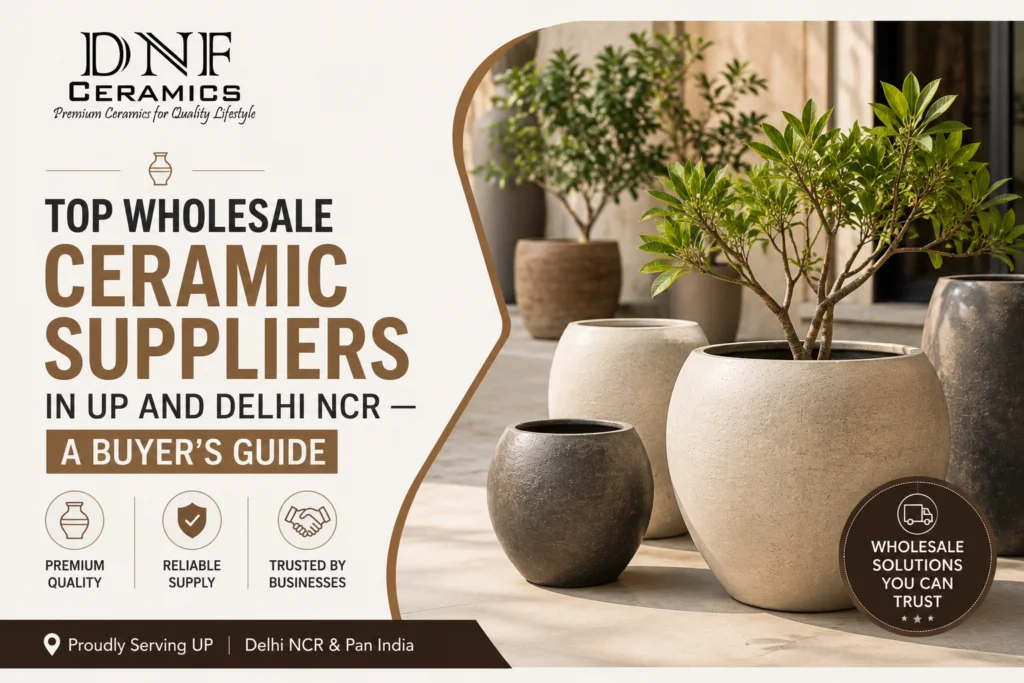
For premium hotel lobbies across India and internationally, glazed ceramic is the default specification material — and for good reason. High-fired glazed ceramic offers a surface quality, tactile weight, and visual depth that no synthetic material authentically replicates. The glaze surface catches and reflects light in a way that is immediately associated with quality. The weight of a large ceramic planter communicates permanence. The slight variation in a reactive glaze surface communicates craft.
Ceramic is the correct choice for: five-star and luxury hotel lobbies; boutique hotel reception and lounge areas; heritage and palace hotel interiors; any lobby where the design brief includes natural materials, authentic textures, or premium craft. For the full guide to selecting ceramic lobby planters, see Best Large Ceramic Planters for Hotel Lobbies in India. For material comparison, read FRP vs Ceramic Planters — Which is Better for Hotels.
2. FRP — The Large Format and Outdoor Specialist
FRP (Fibre Reinforced Plastic) is the material of choice when weight, size, or volume requirements make ceramic impractical. A 150cm ceramic planter for a hotel atrium may weigh 80–120kg fully planted — a structural and logistics challenge. The same piece in FRP weighs a fraction. FRP planters can also be produced in dimensions that are not achievable in ceramic — very wide rectangular troughs, highly elongated tall forms, complex architectural shapes.
FRP is the correct choice for: hotel driveways and entrance landscaping; poolside and resort outdoor areas; roof terraces with floor load constraints; any position where a planter exceeds 120cm height and ceramic weight is a structural concern. For the commercial landscaping application, see Top 10 FRP Planters for Commercial Landscaping Projects.
3. Terracotta — The Heritage and Biophilic Choice
Terracotta is the material for hotel lobbies and resort public spaces where the design brief calls for natural, earthy, heritage, or biophilic aesthetics. The unglazed reddish clay communicates a different quality register to glazed ceramic — more rustic, more organic, more connected to the earth. For boutique resort lobbies, spa reception areas, wellness centres, and heritage properties, terracotta can be exactly the right specification.
Terracotta is also the superior material for plant health — its porosity prevents root rot in a way that glazed ceramic cannot. For properties that prioritise plant longevity in their landscaping, see our terracotta vs ceramic comparison. Browse terracotta and clay pots at DNF Ceramics.
4. Concrete and Stone — The Architectural Statement
Concrete and natural stone planters occupy a niche in hotel lobbies — typically at the very large format end (feature statement pieces above 120cm) where the architectural weight of concrete is an asset. They are heavy, expensive to transport, and difficult to customise — but in the right context (a brutalist-influenced contemporary hotel, a landscape architecture-led resort arrival court) they are uniquely appropriate. DNF Ceramics does not manufacture concrete or stone planters — but understanding where these materials belong helps clarify why ceramic is the better choice in most indoor hotel lobby environments.
5. Plastic — What to Avoid
Plastic planters have no place in any hotel lobby that is serious about quality perception. The visual and tactile qualities of plastic are immediately apparent to guests — it signals budget specification even when the rest of the lobby is premium. For the full case against plastic, read Ceramic vs Plastic Pots — Why Ceramic Always Wins.
The Decision Framework: Four Questions
When uncertain about material choice for a specific lobby position, answer these four questions:
- Is this a guest-facing premium indoor environment? → Ceramic
- Does the position require a piece above 120cm or a very large diameter that would make ceramic impractically heavy? → FRP
- Is the design brief biophilic, rustic, or heritage-focused? → Terracotta
- Is this an outdoor landscaping position exposed to weather and UV? → FRP or terracotta depending on aesthetic
For a full specification checklist to complete before procurement, use our Planter Specification Checklist for Architects. For the procurement guide once specification is complete, read How to Source Planters for Your Hotel or Resort in India. For long-term care once installed, see the Ceramic Planter Maintenance Guide for Hotels.
The Role of Scale and Proportion
Material choice alone does not determine whether a lobby planter succeeds or fails — scale and proportion are equally important. The most common failure in hotel lobby planter specification is undersizing: ordering planters that look substantial in a product photograph but are dwarfed by the actual lobby volume. As a rule of thumb, for lobbies with ceiling heights above 4m, floor-standing planters should be a minimum of 90cm height. For double-height lobbies above 6m, 120–150cm is appropriate for primary positions. See Best Large Ceramic Planters for Hotel Lobbies for a full size guide.